
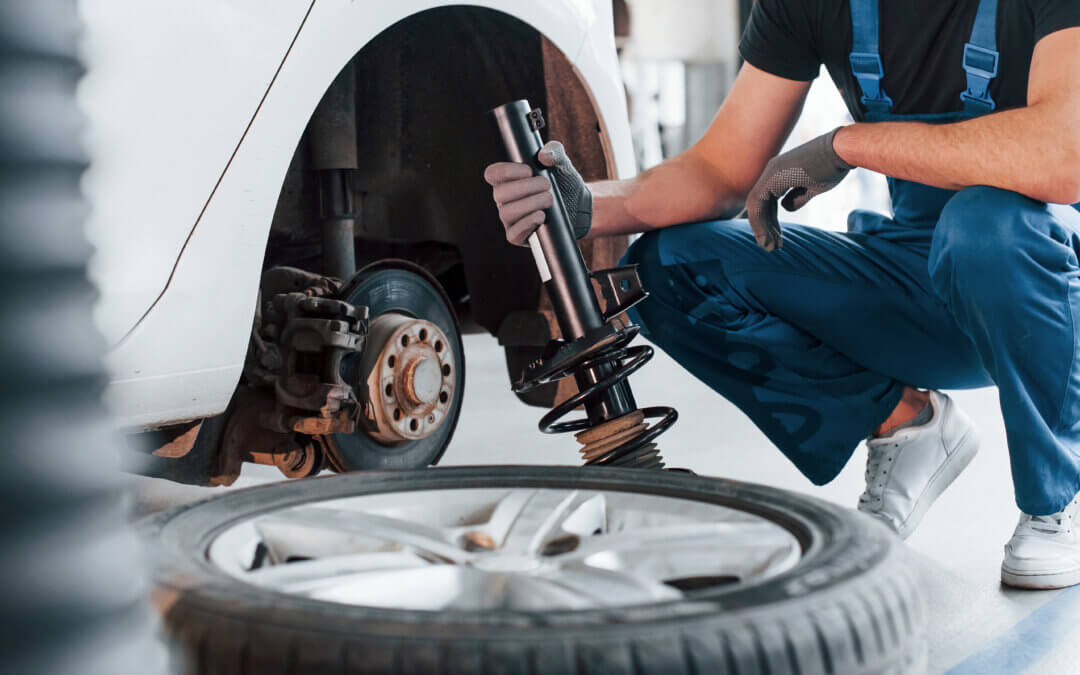
Your vehicle’s suspension does much more than make your ride comfortable. It plays an important role in how your vehicle handles, stops, corners, and maintains contact with the road. Shocks and struts are key parts of that system, but because they usually wear gradually, it can be difficult to notice when their performance begins to decline.
Knowing the signs you need new struts or shocks can help you recognize suspension problems before they begin affecting other parts of your vehicle. A ride that has slowly become rougher, unusual tire wear, excessive bouncing, or changes in handling may all indicate that your shocks or struts need attention.
Here are some of the most common warning signs and why having suspension problems inspected sooner rather than later can make a difference.
What Do Shocks and Struts Actually Do?
Shocks and struts both help control the movement of your vehicle’s suspension, but they are not exactly the same component.
Shock absorbers help control the movement of the springs and suspension. Their job is to reduce excessive bouncing and help keep the tires firmly in contact with the road.
Struts perform a similar ride control function but are also a structural part of the suspension system on vehicles equipped with them. Depending on the vehicle, a strut assembly may incorporate several suspension components.
Not every vehicle has both shocks and struts. Some use struts in the front and shocks in the rear, while others may use shocks at all four wheels.
Regardless of the design, these components have a significant impact on ride quality, steering, braking, and stability.
1. Your Vehicle Bounces Excessively
One of the easiest signs you need new struts or shocks to recognize is excessive bouncing.
When you drive over a bump, your suspension naturally moves to absorb the impact. Your shocks or struts then control that movement so the vehicle quickly settles.
When these components become worn, the vehicle may continue moving up and down after you’ve already passed the bump.
You might especially notice this when driving over speed bumps, railroad tracks, potholes, or uneven pavement.
A vehicle that feels like it continues floating or bouncing after hitting a bump should have its suspension inspected.
2. The Ride Feels Rougher Than It Used To
Suspension wear often develops so gradually that drivers become accustomed to it.
You may begin noticing every crack, bump, and imperfection in the road. Roads that once felt relatively smooth may suddenly seem much rougher.
While tire problems and other suspension components can also affect ride quality, worn shocks or struts are a common possibility.
If you’ve owned your vehicle for several years and can’t remember the ride being this harsh, it may be worth having the suspension checked.
3. Your Vehicle Dips Forward When Braking
Watch how your vehicle behaves when you apply the brakes.
Does the front end seem to dive toward the pavement?
A noticeable forward dip during braking, sometimes called nose diving, is one of the potential signs you need new struts or shocks.
Your suspension helps control how the vehicle’s weight shifts during braking. Worn ride control components may allow excessive movement, causing the front of the vehicle to dip more dramatically.
This isn’t simply a comfort issue. Worn shocks and struts can negatively affect braking performance and vehicle stability.
4. The Vehicle Leans or Sways Through Turns
Your vehicle should feel controlled and predictable when going around a corner.
If it suddenly feels like the body is leaning excessively to one side or swaying through turns, something may be wrong with the suspension.
Worn shocks and struts can become less effective at controlling weight transfer as the vehicle corners. This may leave the vehicle feeling less stable and require additional steering input from the driver.
This problem may become especially noticeable on highway entrance ramps, sharper curves, or during quick lane changes.
5. Your Tires Are Wearing Unevenly
Your tires can reveal quite a bit about the condition of your suspension.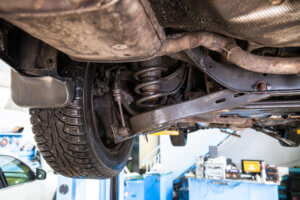
When shocks and struts are working properly, they help maintain consistent tire contact with the road. As they wear, excessive suspension movement can interfere with that contact.
One possible result is uneven tire wear, including a pattern known as cupping or scalloping.
Instead of simply replacing an unevenly worn tire, it’s important to determine why the unusual wear developed. Alignment problems, incorrect tire pressure, damaged suspension components, and worn shocks or struts can all contribute to abnormal tire wear.
If you notice unusual patterns across your tire tread, have both the tires and suspension inspected.
6. You Hear Clunking or Knocking Over Bumps
Suspension noises shouldn’t be ignored.
If you begin hearing clunking, knocking, or other unusual sounds when driving over bumps, your shocks, struts, mounts, or another suspension component could be worn or damaged.
A worn shock or strut may bottom out as the suspension moves. Worn mounting components can also produce similar noises.
Because many suspension problems can create similar sounds, a professional inspection is usually the best way to pinpoint the source.
7. You See Fluid Around a Shock or Strut
Shocks and struts contain hydraulic fluid that helps control suspension movement.
If a seal fails, that fluid may begin leaking from the component.
A small amount of residue doesn’t automatically mean a shock or strut has completely failed, but significant fluid running down the outside of the component deserves attention.
Visible leakage combined with bouncing, poor handling, or unusual tire wear is a stronger indication that the component may no longer be performing correctly.
8. The Vehicle Feels Unstable at Highway Speeds
Another potential warning sign is a vehicle that seems to wander or float while traveling at higher speeds.
You may feel as though you’re constantly making small steering corrections to keep the vehicle traveling straight.
Windy conditions can make this feeling even more noticeable.
A number of issues can cause highway instability, including tire problems, wheel alignment, worn steering components, and suspension problems. Worn shocks and struts are among the components technicians may inspect when diagnosing this type of complaint.
9. The Rear Squats During Acceleration
Pay attention to how your vehicle behaves when you accelerate.
If the rear drops noticeably while the front rises, the suspension may not be controlling weight transfer effectively.
Some movement is normal during acceleration, particularly in more powerful vehicles. Excessive squatting, however, can indicate worn suspension components.
Worn shocks and struts may allow excessive rear squat because they are no longer effectively controlling suspension movement as weight shifts toward the rear of the vehicle.
10. Your Steering Wheel Vibrates
A vibrating steering wheel can have many causes, so this symptom alone doesn’t necessarily mean your shocks or struts need replacement.
Tire imbalance, tire damage, alignment issues, worn steering components, brakes, and wheel bearings can all cause vibration.
However, vibration that occurs even on relatively smooth roads can sometimes be associated with worn shocks, struts, or steering stabilizers.
If the vibration is new or becoming more noticeable, have the vehicle inspected rather than assuming it only needs a tire balance.
How Long Do Shocks and Struts Last?
There isn’t one mileage at which every vehicle automatically needs new shocks or struts.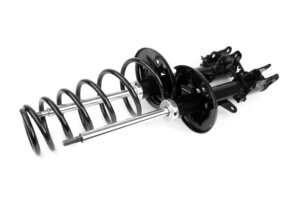
Their lifespan depends heavily on the vehicle, road conditions, driving habits, loads, climate, and the quality of the components.
Frequent driving over potholes and rough pavement can increase suspension wear. Carrying heavy loads, towing, traveling on unpaved roads, and exposure to harsh environmental conditions can also affect how quickly ride control components deteriorate.
This is why symptoms and inspections are more useful than relying solely on an odometer reading.
Minnesota Roads Can Be Tough on Suspension Components
Drivers in Minneapolis know that road conditions can change dramatically throughout the year.
Cold temperatures, snow, ice, road salt, freeze and thaw cycles, and potholes can all be hard on vehicles. Hitting a deep pothole can place considerable stress on tires, wheels, steering components, and the suspension.
Even if the impact doesn’t cause an immediate failure, repeated exposure to rough roads can contribute to wear over time.
If you’ve hit a significant pothole and your vehicle suddenly pulls, vibrates, makes noise, or handles differently, don’t wait for the problem to become more noticeable.
Can You Drive With Worn Shocks or Struts?
A vehicle with slightly worn suspension components may still be drivable, but that doesn’t mean the issue should be ignored.
As shocks and struts deteriorate, you may experience reduced vehicle stability, compromised handling, abnormal tire wear, and changes in braking performance. Worn ride control components can also place additional stress on related steering and suspension parts.
The severity of the problem matters. A vehicle that is bouncing dramatically, making loud suspension noises, leaning severely, or becoming difficult to control should be inspected promptly.
Do Shocks and Struts Need to Be Replaced in Pairs?
In many situations, shocks and struts are replaced in pairs on the same axle.
Replacing both sides helps maintain consistent ride control and handling from one side of the vehicle to the other. However, the correct repair depends on the vehicle, the condition of the components, and the manufacturer’s recommendations.
An inspection can also reveal whether related components such as mounts, springs, bushings, or other suspension parts need attention at the same time.
Don’t Assume Every Rough Ride Means Bad Struts
Although knowing the signs you need new struts or shocks is useful, suspension systems contain many components that can produce similar symptoms.
A clunk could come from a strut mount, ball joint, control arm, sway bar link, or another component. Uneven tire wear could be caused by alignment. Steering vibration might originate from a tire or wheel.
That’s why diagnosis matters.
Replacing parts based only on one symptom can become expensive without solving the actual problem. A complete steering and suspension inspection allows a technician to determine what’s worn and what is still functioning correctly.
Why Suspension Problems Shouldn’t Be Ignored
It’s easy to think of shocks and struts primarily as comfort components. In reality, they contribute to how well your vehicle maintains tire contact with the road and controls body movement during braking, acceleration, and cornering.
Ignoring worn components may eventually lead to additional tire and suspension wear. More importantly, deterioration can change how the vehicle responds during emergency maneuvers or poor road conditions.
Recognizing the signs you need new struts or shocks gives you an opportunity to address the issue before those changes become more severe.
Conclusion
Shocks and struts often wear slowly, which makes it easy to overlook changes in your vehicle’s ride and handling. Excessive bouncing, a rough ride, unusual tire wear, nose diving while braking, swaying through turns, suspension noises, fluid leaks, and highway instability can all indicate that it’s time for an inspection.
If you’re noticing any of the signs you need new struts or shocks, having the suspension professionally evaluated can determine whether the shocks or struts are actually responsible or another steering or suspension component is causing the problem.
If your vehicle doesn’t ride or handle the way it used to, Hawkins Automotive can help identify the cause and recommend the repairs your vehicle actually needs. Contact us here to schedule an appointment and have your steering and suspension system inspected.
Further Reading
Monroe: Signs of Bad Shocks & Struts
Monroe: How to Conduct a Shock or Strut Inspection